¶ 1. Overview
The General Cheque feature allows law firms to record money paid out of the firm’s general (operating) bank account. General cheques are used for:
- Paying vendors
- Paying firm expenses
- Refunding clients (non‑trust refunds)
- Paying court fees
- Paying third‑party service providers
- Recording any general‑account withdrawal made by cheque
This feature ensures all general‑account disbursements are properly documented, categorized, and included in reconciliation and financial reporting.
¶ 2. When to Use a General Cheque
Use this feature when:
- The firm issues a cheque from the general operating account
- A vendor or supplier is being paid
- A court filing fee or government fee is paid
- A non‑trust client refund is issued
- A general‑account expense needs to be recorded
- A cheque withdrawal must appear in the general ledger and reconciliation
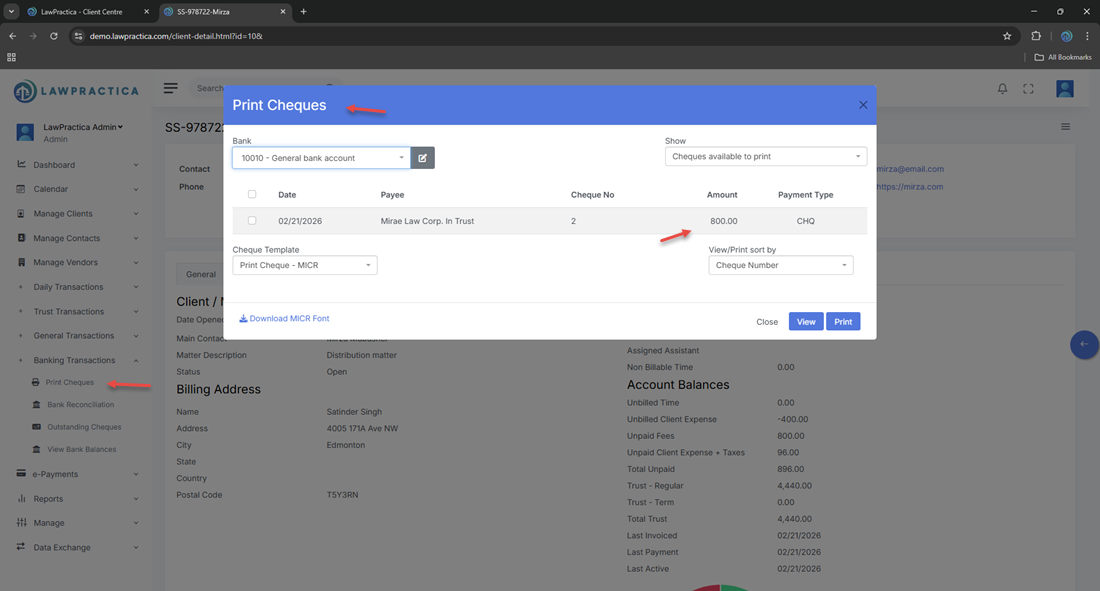
General cheques must not be used for trust withdrawals — those must be recorded using Trust Cheque.
¶ 3. Bank Selection
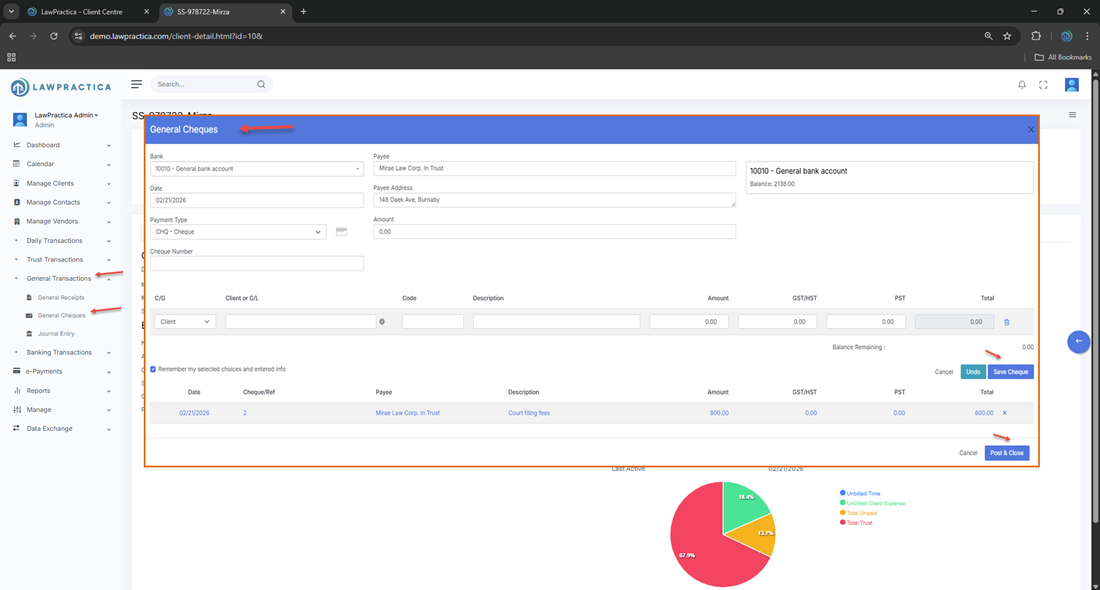
At the top of the form, users must select the general bank account from which the cheque is issued.
¶ Bank Selection Details
- Only general operating accounts appear
- Ensures the cheque is posted to the correct general ledger
- Required before entering cheque details
- Prevents accidental posting into trust accounts
Selecting the correct bank ensures accurate reconciliation and reporting.
¶ 4. Cheque Number
Users must enter the cheque number to maintain:
- Accurate audit trail
- Bank reconciliation accuracy
- Sequential cheque tracking
- Compliance with accounting standards
- Cheque numbers cannot be reused or duplicated.
¶ 5. Payee Details
Users must specify who the cheque is being issued to.
¶ Payee Types
- Vendor
- Court
- Government agency
- Client (non‑trust refund)
- Third‑party service provider
- Internal firm payee (if applicable)
¶ Fields
- Payee Name
- Address (optional but recommended)
- Description / Reason for Payment
These details appear in the general ledger and audit reports.
¶ 6. Payment Type
The Payment Type is automatically set to Cheque, indicating:
- Funds are being withdrawn via a physical or electronic cheque
- The transaction will appear as a general withdrawal
- The cheque number must be recorded
¶ 7. Amount & Description
¶ Amount
- Enter the exact amount being paid from the general account.
¶ Description
Examples:
- “Payment to vendor for office supplies”
- “Court filing fee for client matter”
- “Refund to client (general account)”
- “Payment for courier services”
Descriptions appear in all audit logs and financial reports.
¶ 8. Allocating the Cheque to Expenses or Invoices
Depending on the purpose of the cheque, users may:
¶ Allocate to an Expense Category
- Office supplies
- Court fees
- Professional services
- Marketing
- Technology
- Miscellaneous expenses
¶ Apply to a Client Invoice (if applicable)
- If the cheque relates to a client‑specific disbursement, the user may:
- Select the client
- Select the matter
- Record the expense for billing
This ensures proper cost tracking and billing integration.
¶ 9. Posting the General Cheque
When the user selects Post & Close, the system:
¶ General Ledger Effects
- Decreases the general bank balance
- Records a general cheque withdrawal
- Updates expense accounts (if allocated)
¶ Client & Matter Effects (if applicable)
- Records the disbursement under the client
- Makes the expense available for invoicing
¶ Audit Trail
- Records user, timestamp, cheque number, and bank
- Ensures compliance with accounting standards
- General cheques cannot be edited after posting — they must be reversed if corrections are needed.
¶ 10. Compliance Notes
General cheques must follow standard accounting rules:
¶ 1. No Commingling
- General cheques must never be used to withdraw trust funds.
¶ 2. Accurate Allocation
- Expenses must be allocated to the correct category or client.
¶ 3. Full Audit Trail
- Every cheque must record:
- Cheque number
- Date
- Amount
- Payee
- Bank account
- Description
¶ 4. Reconciliation
- General cheques must appear in:
- Bank reconciliation
- General ledger
- Expense reports
¶ 11. Integration with Other Features
General Cheque integrates with:
- General Ledger – Updates operating account balances
- Client Detail – Displays client‑related expenses
- Client Expenses – Adds disbursements for billing
- Reports – Expense reports, bank reconciliation, audit logs
- Find – Search and reverse general cheques
- Daily Activities – Connects to billing workflows
This ensures a complete and accurate general‑accounting workflow.
¶ 12. Summary
The General Cheque feature provides a structured, compliant method for recording cheque payments made from the firm’s general operating account. With support for bank selection, cheque numbers, payee details, expense allocation, and full audit trail tracking, it ensures accurate financial management and seamless integration with billing and reporting.